Case Study: International Early Learning and Child Well-being Study (IELS) | Audio Check in Young Children Assessment
About the Study
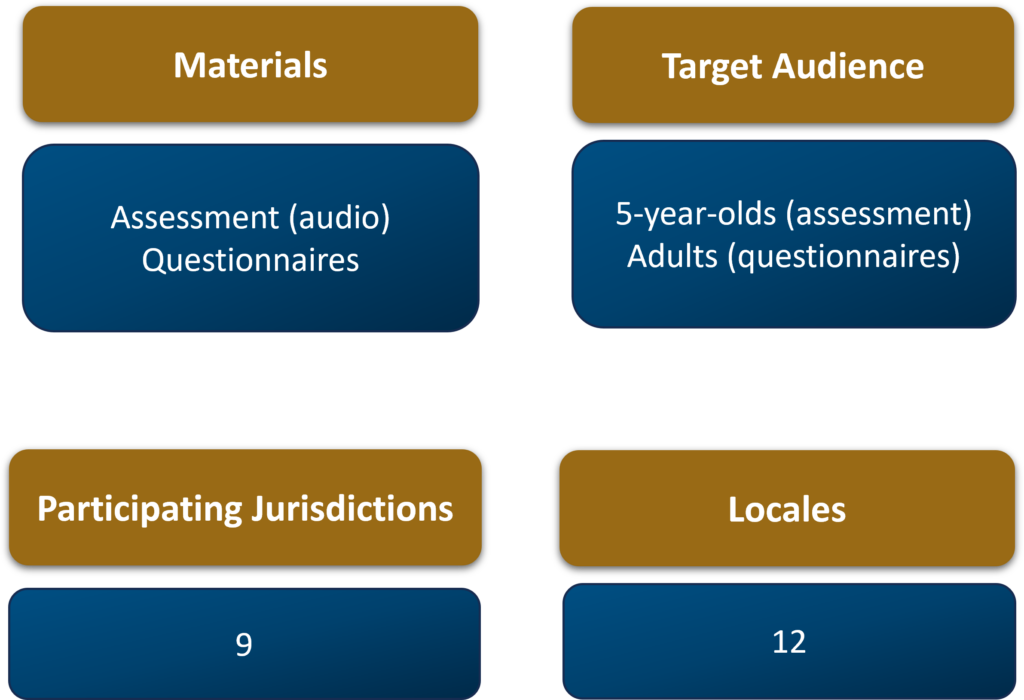
Coordinated by the Organisation for Economic Co-operation and Development (OECD), International Early Learning and Child Well-being Study (IELS) is the first internationally comparative study that measures emergent literacy, emergent numeracy, executive function, and empathy in children at age 5, before they enter formal education.
Started in 2018 with three participants, in this second cycle it expanded to nine jurisdictions for a total of 12 language locales: Baku and Sumgait (Azerbaijan), Ceará, Pará and São Paulo (Brazil), England (United Kingdom), the Flemish Community (Belgium), Hangzhou (China), Korea, Malta, the Netherlands and the United Arab Emirates.
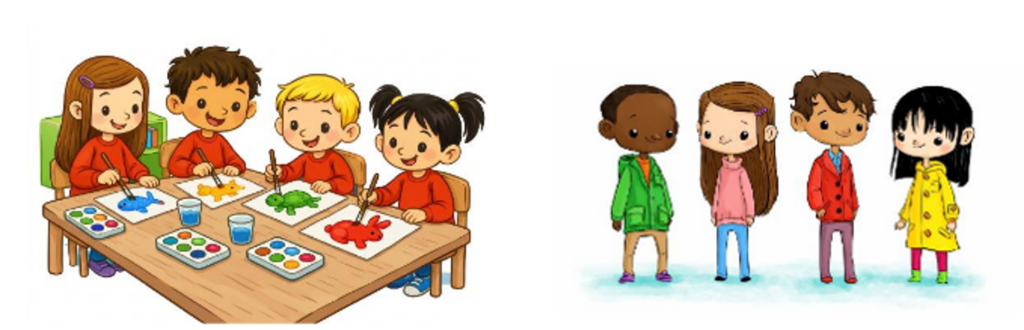
The focus of the study is on identifying key factors that drive or hinder the development of early learning. In this tablet-delivered assessment, recorded voice-overs of child characters use interactive stories and games to guide the children through the questions in an entertaining way. The assessment is complemented with background questionnaires to collect information from the parents and the teachers about the environment of the children. The results of the study for this cycle are summarised in the 2025 Report.
Project at a Glance
Behind the Scenes
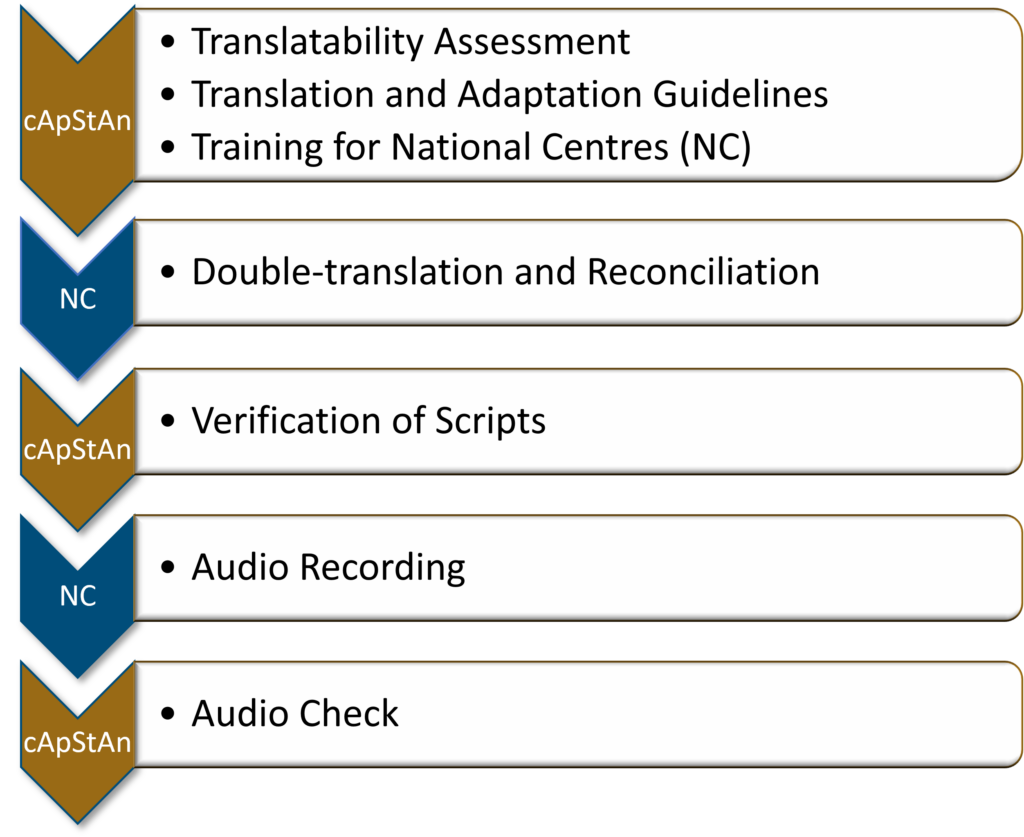
As a member of the IELS international consortium, led by the Australian Council for Educational Research (ACER), and including the International Association for the Evaluation of Educational Achievement (IEA), cApStAn participated in the project by offering a broad range of linguistic quality assurance measures in a complex double-translation and reconciliation workflow including audio recording and audio check.
Before the source was submitted for translation to the national centres (NC), cApStAn conducted a translatability assessment on a draft source of the items that were newly designed for this cycle. Once the source was finalised by ACER, translation and adaptation guidelines together with trainings for the double-translation and reconciliation process were provided to the national centres. The translated script was then verified by cApStAn’s linguists before the audio could be recorded at the national centres. At the end of the process, cApStAn performed a check of the audio recordings to guarantee alignment with the verified script.
What is Special in this Study?
The main answer to this question is the targeted audience. Children at pre-school age may not read and write yet, so to guarantee a fair assessment, content creators developed visuals accompanied by audio that don’t require them to read or write to show what they can do. Because of the peculiarity of these materials, in addition to the verification aspects typical of written production, several other factors came into play.
Match between Script and Audio
Once the script was verified at cApStAn and the national centres recorded the audio, the linguists had to make sure that the audio actually matched the agreed script. Any deviations might in fact cause a different understanding of the story or the questions.
Character Authenticity
Given the variety of the characters in the script (male/female and young/adult characters), multiple voice-over actors were involved. This is an important aspect to take into account in the reproduction of the voice-over actors. What would be the impact on the study if an adult would mistakenly record a child’s line? Would the children be able to follow the story anyway or would they be astonished and distracted with consequences on their ability to answer the questions? This was one of the elements the linguists had to check.
Accents and Pace
When we talk about oral reproduction, we need to consider other possible distractors like regional accents and pace. In this case, the recommended pace had to be appropriate for the age group, including a story-telling style which would capture the children’s attention.
Neutral Delivery
It was also important to make sure that the voices did not “give away” the answer, for instance by stressing a word or expression, thus influencing the children’s answer.
Gender-Specific Versions
Another layer of complexity was represented by the text that was addressed directly to the respondents. For example, in languages that are gender-dependent (i.e. that present variations for males/females), for a line like “You chose surprised. Listen to these reasons and choose the one that describes why you feel surprised” there is a good chance that “surprised” has two variants, one for girls and one for boys. As a result, the audio was recorded twice – one version for male respondents, one for female respondents, in what we call a double-gender production. This was the case for Arabic, Maltese, Brazilian Portuguese, Russian for Azerbaijan. Both versions were checked for appropriateness.
Given all these facets to be taken into account during the linguistic production of the assessments, we can’t really say it was “child’s play”. However, thanks to the precious input from our linguists, the outstanding teamwork with the consortium members ACER and IEA as well as the smooth collaboration with the participating jurisdictions, the project was successfully completed and administered in due time producing results that are valuable for the decision-making process in the respective countries.
Client Feedback
ACER experienced excellent cooperation with cApStAn throughout the IELS study, and their contribution was instrumental to the project’s success. cApStAn consistently provided inputs in a timely and reliable manner, often working to demanding schedules without any compromise in quality. This responsiveness enabled smooth coordination across teams and helped keep the study on track at critical stages.
The team also demonstrated a very high level of technical acumen. Their understanding of the methodological and operational requirements of a complex international study was evident in the precision and clarity of their work, as well as in their ability to anticipate and address potential issues early. In addition, cApStAn brought outstanding linguistic expertise to the collaboration. The quality of the linguistic verification reflected both technical accuracy and cultural sensitivity, ensuring that assessment materials were fit for purpose across a wide variety of cultural contexts.
Overall, the collaboration was professional, constructive, and highly effective, and we greatly valued cApStAn’s expertise and commitment.
Maurice Walker, ACER, Project Director for IELS
Learn More about IELS
OECD releases landmark international study on early learning and development – ACER News
Delivering a landmark international study in early learning – ACER News
IELS 2025: Thriving at 5 – early childhood learning and development
Want to try this out on your materials?
Select some sample items, and request a free pilot at hermes@capstan.be or contact us via the form below for more details.