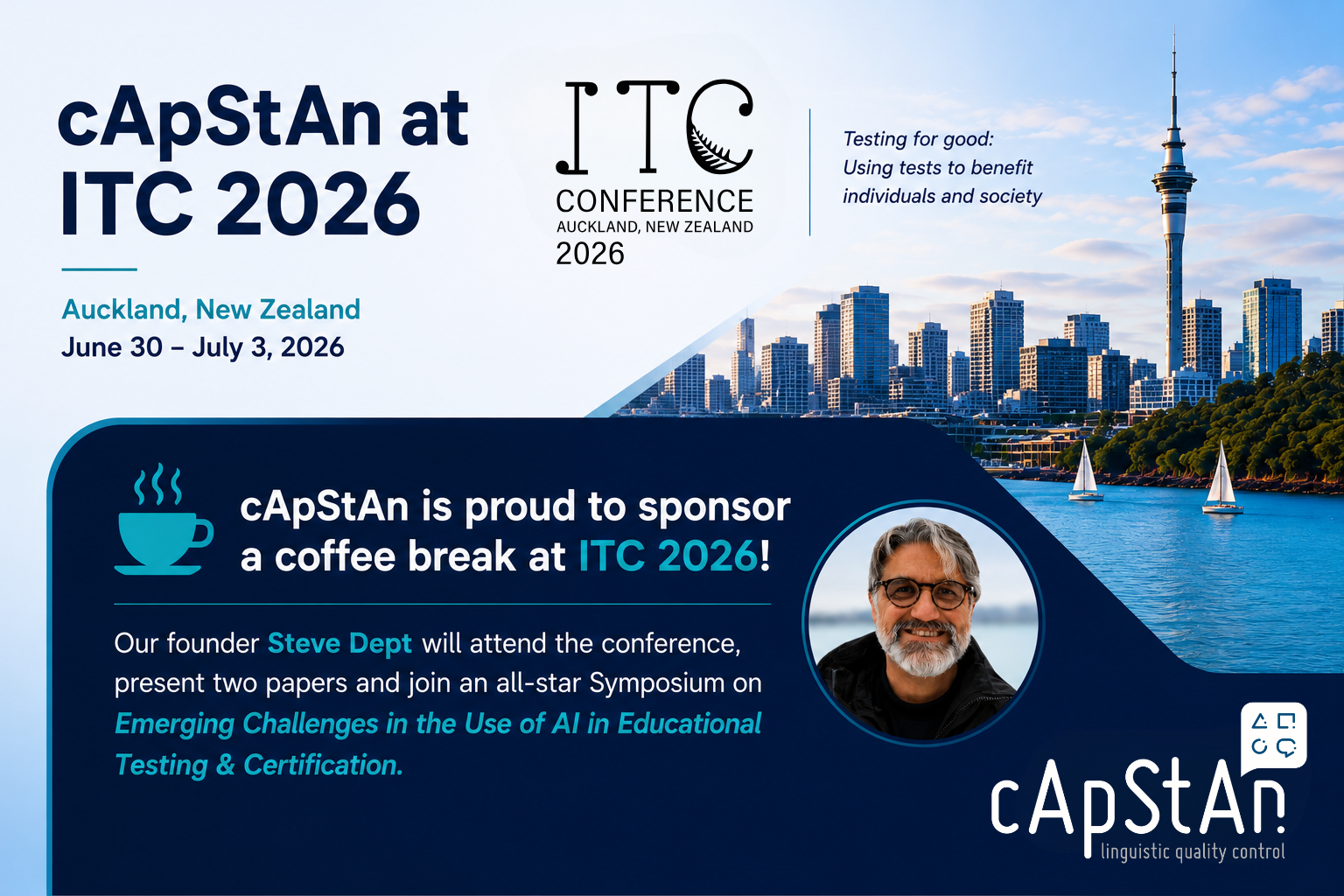
A scientific programme with a strong focus on trust, equity and human experience
Conference Website: https://www.itc2026auckland.com
For almost half a century now, the International Test Commission (ITC) actively promotes effective, valid and fair assessment practices around the world. The theme of the 2026 edition of the biennial ITC conference, which will take place from June 30 to July 3 in Auckland, New Zealand, is in line with the core values of the ITC: Testing for good: Using tests to benefit individuals and society.
New Zealand combines a forward-looking education policy with indigenous knowledge leadership, and is the perfect setting for researchers, field practitioners, measurement specialists, test developers and decision-makers to reflect on ways to use assessments responsibly. Educational and psychological test outcomes are life-defining events in the users’ lives, and technologies have pushed (or pulled) assessments towards an inflection point. In Auckland, some of the finest minds in the testing community will reaffirm that validity and fairness are not incompatible with digital ecosystems, and that it takes a conscious effort to uphold trust and equity in present-day assessment contexts.
cApStAn’s founder Steve Dept, who currently serves on the ITC Council, will attend, of course, and cApStAn Linguistic Quality Control is delighted to sponsor a coffee break at the conference, set in the Owen G. Glenn Building of the University of Auckland. The scientific programme is dense, as the numerous use cases of implementing AI in assessment make it possible to discard hyperbolic claims and to report on concrete benefits. Much progress has been made on identifying the risks to validity and fairness; evidence on the effectiveness of safeguard has become available; At the conference, myths will be debunked, and measurable advances will be shared. Hard questions will be asked, and the level of critical thinking at ITC carries the promise of separating the wheat from the chaff and of reassessing the role of human expertise in a technology-rich testing environment. This is a conference for professionals who want to use AI thoughtfully, not uncritically.
Former ITC President Steve Sireci will be the discussant in an all-star Symposium, with as panellists the current ITC President Kadriye Ercikan-Alper, Guillermo Solano-Flores, Professor at Stanford, Isabelle Gonthier, Chief Assessment Officer at PSI & ETS, Sergio Araneda, Senior Researcher at Caveon and cApStAn’s founder Steve Dept. They will confront their views on Emerging Challenges in the Use of Artificial Intelligence in Educational Testing & Certification.
cApStAn’s first participation in an ITC conference dates back to 2006, when we presented a poster on the double translation design implemented in OECD’s Programme for International Student Assessment (PISA), still one of cApStAn’s flagship projects today. Twenty years later, cApStAn’s founder Steve Dept will present the results of a feasibility and validation study of using supervised automated translations in support of the PISA double translation design. The presentation is titled Feasibility and validation study of a hybrid translation setting for PISA instruments.
The role of AI and large language models (LLMs) across the full psychometric workflow is also worth exploring: Pavlos Stampoulidis, a psychometrician and product manager at Epignosis, and Steve Dept will report on an experiment involving LLM-assisted translation and cultural adaptation of IPIP personality assessment items from English into Greek and Indonesian. The title of the presentation is Can Machines Understand Culture? Evaluating LLM-Assisted Personality Assessment Translation Beyond WEIRD Contexts. WEIRD as in Western, Educated, Industrialised, Rich and Democratic.
This conference is an important milestone about what can and what should not be automated in high-stakes tests, where psychometric judgment takes centre stage. Auckland, here we come!