Update: Scaling Leadership Development Tools Across Languages
Differentiated workflows. Connected technology. Human expertise where it matters most.
A case study in applying differentiated localisation workflows to psychometric assessments, platform content and learning materials.
Scenario
An international organisation specialising in leadership and executive development initially needed to localise its full portfolio into seven European languages. Its materials included psychometric assessments, 360-degree and pulse surveys, results reports, learning resources, follow-up activities and the user interface of an online platform.
The challenge was not simply to translate a growing volume of content. Each content type carried a different level of risk, required a different degree of cultural adaptation and followed a different update cycle. A psychometric item could not be treated in the same way as a user-interface string or a frequently updated learning resource.
The organisation therefore needed a localisation partner capable of designing interconnected workflows, integrating securely with its technical environment and scaling the process as the portfolio expanded into further European and East Asian markets.
At a glance

Scalable Solutions, Built for the Long Term
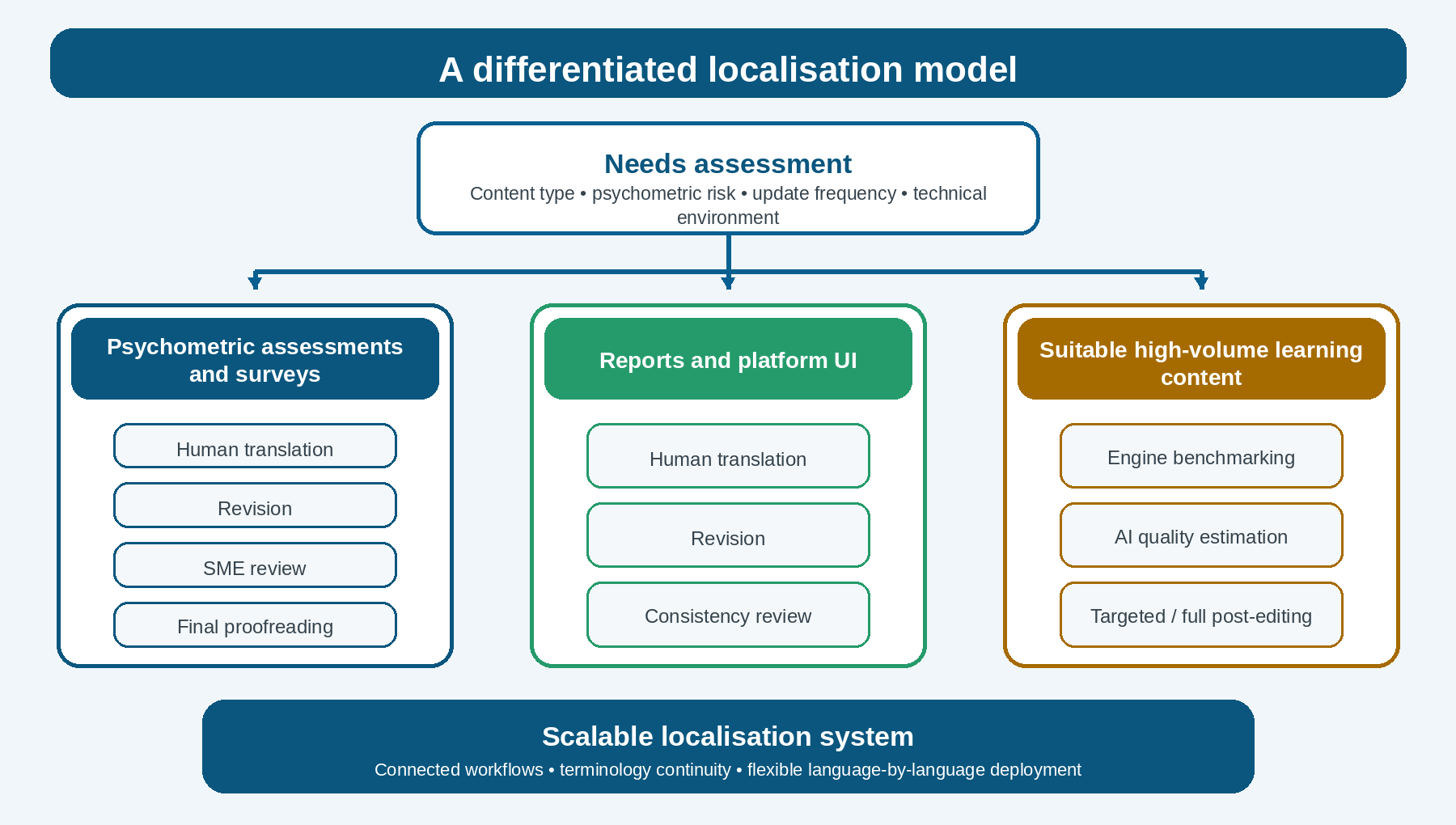
cApStAn began by analysing the portfolio and grouping the materials according to their purpose, sensitivity and expected update frequency. Three complementary workflows were designed so that the level of human scrutiny and technological support matched the risk associated with each content type. This model supported the initial seven-language rollout and could later be extended without redesigning the entire system.
Human Translation with Subject-Matter Expert Review
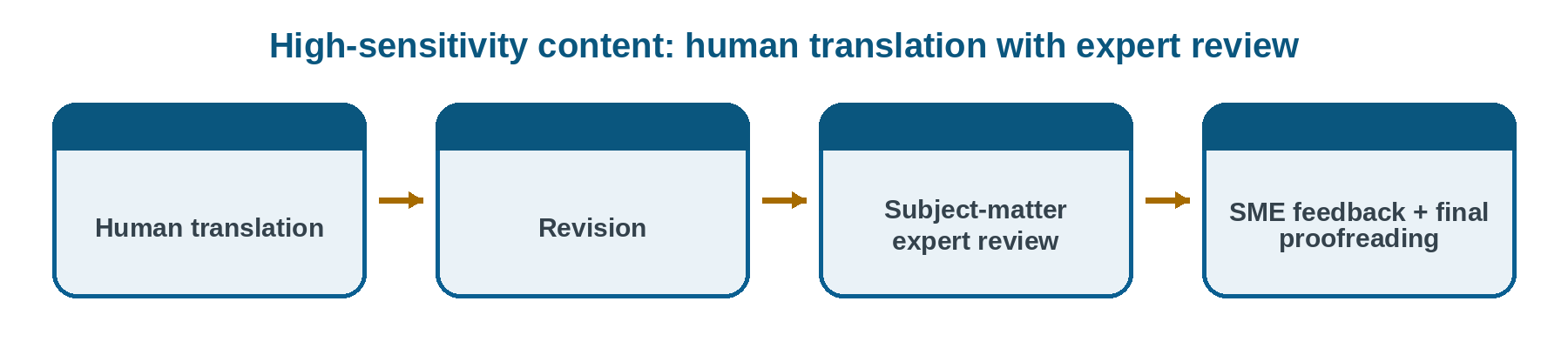
Psychometric assessments and related surveys followed a fully human-driven workflow. Subtle shifts in wording, register or cultural interpretation can change how an item functions, so the target versions required more than linguistic accuracy alone.
A customised, secure version of the open-source CAT tool OmegaT was used to fetch materials directly from the client’s servers. Translators and revisors were trained to use the environment and received project-specific guidance on assessment translation, terminology, tone and cultural adaptation.
Native-speaking subject-matter experts with expertise in psychometrics reviewed the translated assessments to check that terminology was appropriate and that the intended constructs and psychometric properties had been preserved. Proofreaders then implemented the approved changes and carried out a final linguistic review before delivery.
Reports and Platform Content
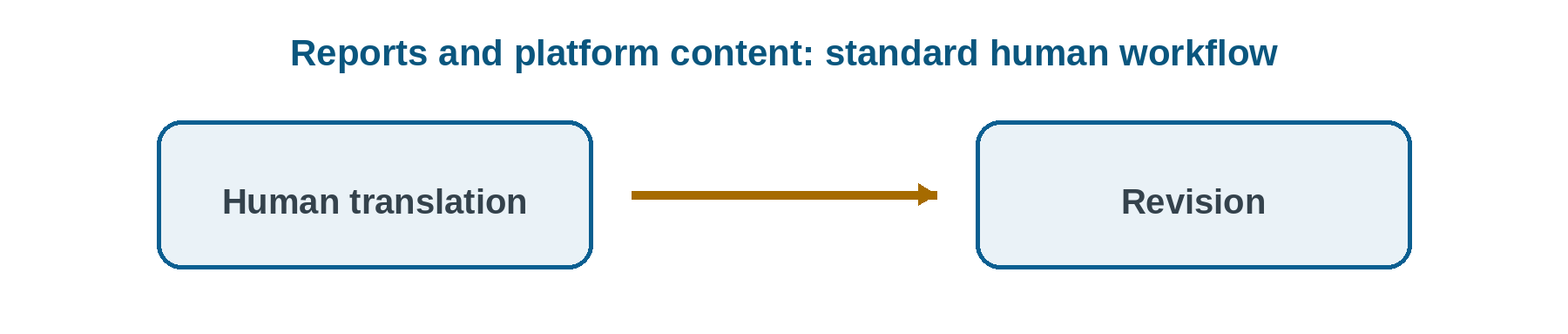
Results reports, user-interface content and other scheduled updates followed a standard professional translation and revision process within the same connected environment. Keeping these materials in a shared workflow supported terminology continuity across the organisation’s assessments, reports and user-facing content.
Technology-Supported Workflows for Suitable Content
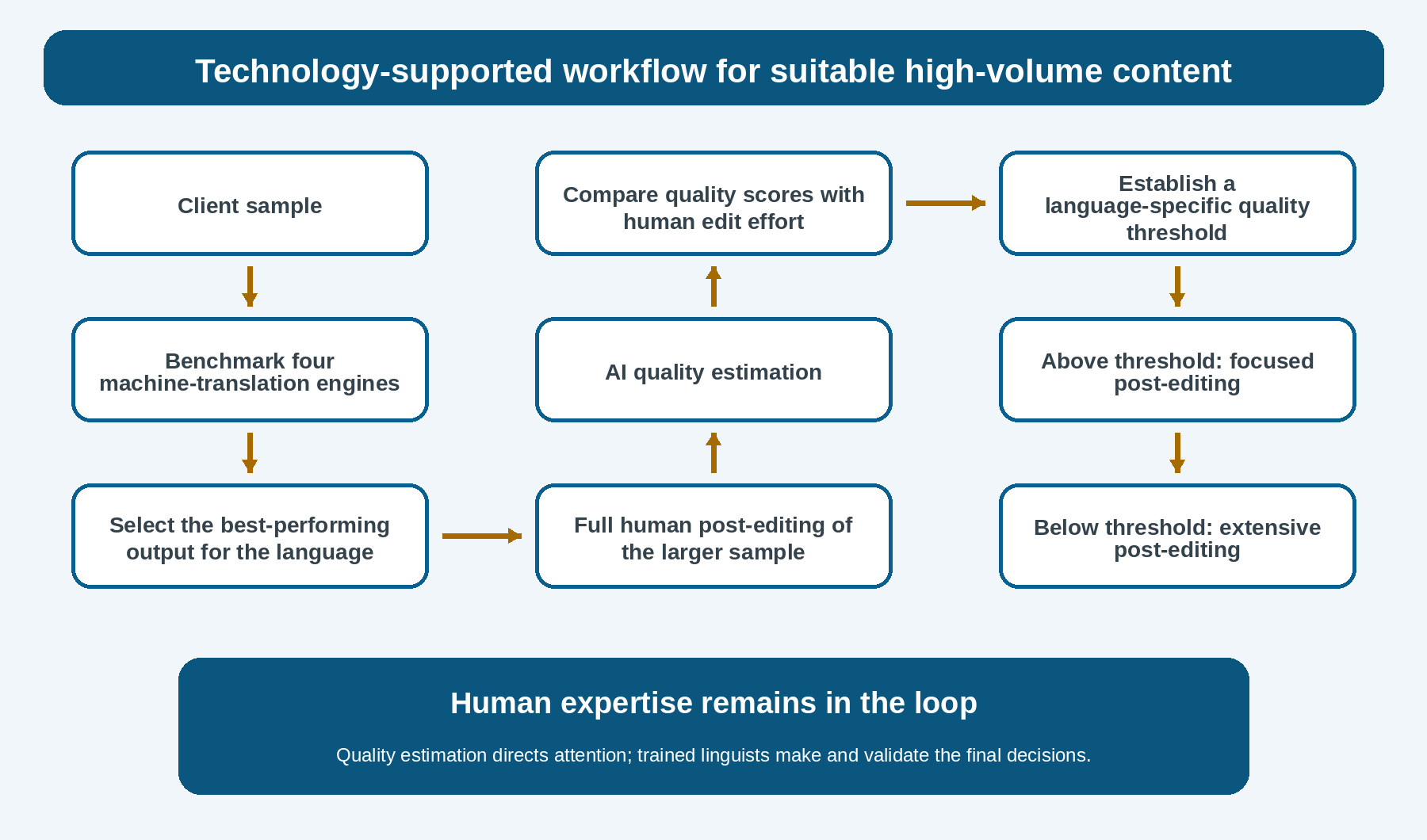
For suitable high-volume learning materials and follow-up content, cApStAn designed a workflow combining machine translation with human quality assurance. The objective was not to remove linguists from the process, but to direct their attention towards the segments most likely to require expert judgement.
A representative sample was processed through several machine-translation engines and evaluated by human linguists for accuracy and fluency. The best-performing option was then selected for the target language. A larger sample could subsequently be assessed using an AI Quality Estimation tool, with the quality score compared against the amount of human editing required.
This evidence informed a language-specific threshold: higher-scoring segments could receive focused post-editing, while lower-scoring segments would receive more extensive human intervention. The architecture was also prepared to accommodate rapid, unscheduled updates if required; however, on-the-fly translation was not deployed during the project phase described here.
Extending the Model Beyond the Initial Rollout
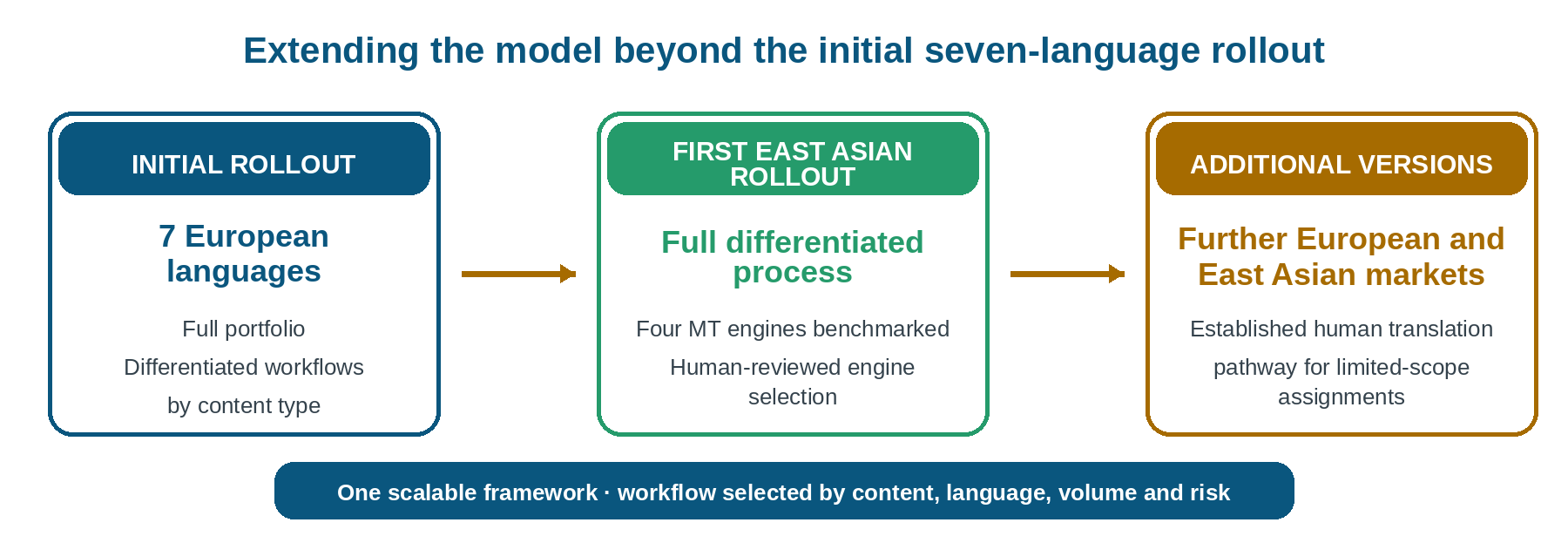
After the initial seven-language European rollout, the organisation added four further language versions, bringing the programme into additional European and East Asian markets. The underlying framework remained stable, while the precise workflow was adapted to the scope and risk profile of each assignment.
The first East Asian rollout followed the fuller differentiated process. Four machine-translation engines were benchmarked, and human linguists selected the best-performing output before the subsequent quality-assurance stages. The remaining additions were more limited in scope and therefore followed the established human translation pathway rather than the full technology-supported process.
This expansion reinforced an important principle: scalability does not mean applying an identical pipeline everywhere. It means maintaining a robust framework that can be adjusted according to content type, language, volume, risk and project requirements.
Challenges
Preserving psychometric meaning
Assessment content is highly sensitive to subtle shifts in wording, register and cultural interpretation. Translators and subject-matter experts needed to ensure that the target versions measured the same constructs as the source.
Managing diverse content types
The portfolio ranged from psychometric items and surveys to reports, platform strings and learning resources. Each category required its own balance of linguistic expertise, technological support and quality control.
Uneven machine-translation performance
Machine-translation quality varied across languages. Engine selection therefore needed to be based on language-specific human evaluation rather than on a single global technology choice.
Supporting growth without losing control
New markets, languages and content updates increased the scale of the programme. The workflows needed to remain efficient without weakening terminology management, documentation, cultural relevance or stakeholder oversight.
Outcomes
The result is a robust and adaptable localisation model that has supported the organisation from its initial seven-language European rollout through a broader multilingual expansion. The differentiated workflows have enabled cApStAn to:
- preserve the meaning and psychometric integrity of assessment content;
- maintain consistency across assessments, reports and platform materials;
- use machine translation selectively where the content and language make it appropriate;
- integrate human expertise at every critical quality-control stage;
- accommodate new languages without redesigning the entire production process; and
- support frequent updates without delaying product releases.
The latest phase confirms that a scalable localisation workflow is not a fixed pipeline. It is a flexible system in which people, technology and quality controls are combined differently according to what each content type, language and assignment requires.
Client Feedback
“We have experienced zero delays in releases due to missing translations due to their efficiency as a supplier, including with short notice changes in the product.”
“We have had zero quality complaints in the 2-3 years from end users, despite significant usage, due to the quality of cApStAn’s work.”
“cApStAn’s ability to adapt and implement the MT process has ensured quality is retained, without making cost an insurmountable barrier, as we increased the volume of content in our system by an order of magnitude.”
DO YOU WANT TO TRY OUT THIS PROCESS ON YOUR MATERIALS?
Select some sample items and request a free pilot at hermes@capstan.be, or contact us to discuss how a differentiated localisation workflow could support your multilingual assessment or talent-development programme.
Read also our previous case study here.