TIMSS – Trends in International Mathematics and Science Study
Supporting the quality of international educational assessment through expert translation verification
About the Study
For more than three decades, TIMSS has been one of the world’s leading international large-scale assessments of student achievement. Conducted every four years by the International Association for the Evaluation of Educational Achievement (IEA) and directed by the TIMSS & PIRLS International Study Center at Boston College, TIMSS measures mathematics and science achievement among Grade 4 and Grade 8 students while collecting extensive contextual information about teaching, learning, schools, and educational systems.
With participation from more than 70 education systems, TIMSS enables countries to benchmark educational performance internationally, monitor long-term trends, evaluate curriculum implementation, and inform evidence-based education policy.
TIMSS 2027 represents the ninth assessment cycle and the second fully digital administration of the study.
The assessment frameworks continue to balance trend measurement with innovations reflecting contemporary mathematics and science education, while preserving comparability across assessment cycles.
Why Translation Quality Matters
Delivering a fair international assessment requires every participating country or entity to administer linguistically and culturally equivalent assessment materials.
Table 1. Differences in the level of comprehension of certain concepts across languages*
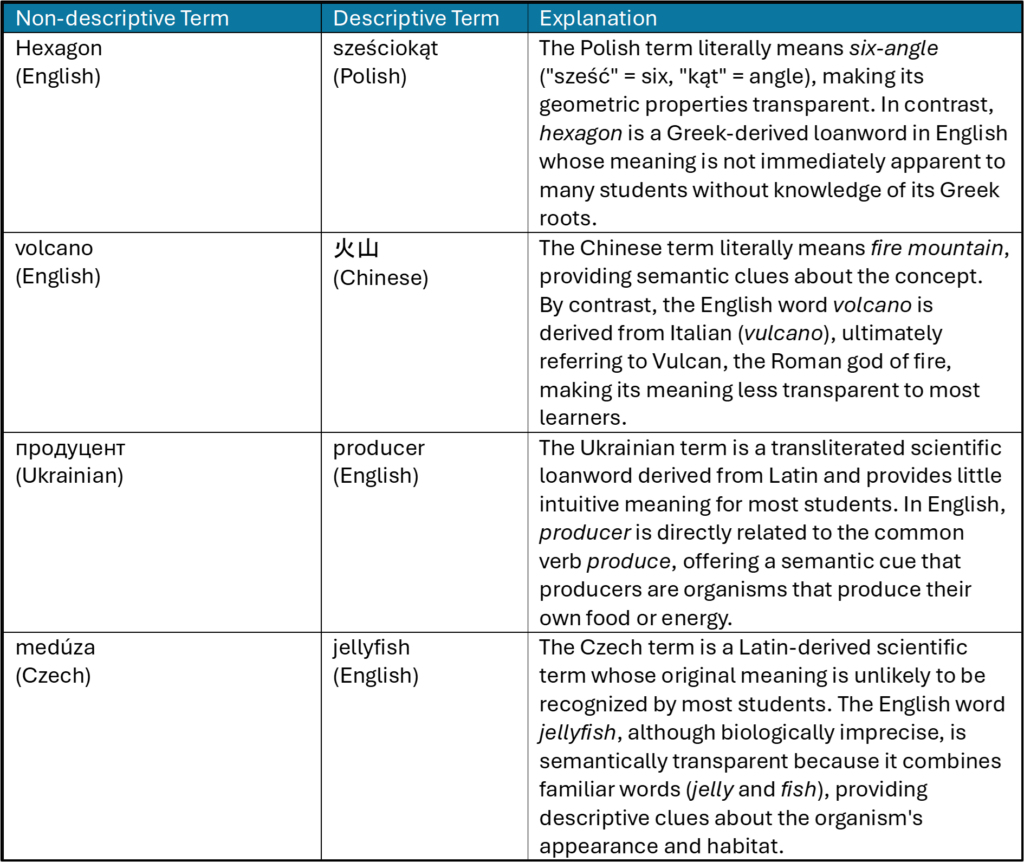
*The examples are illustrative only and are not taken from actual TIMSS assessment items.
In other words, asking a Polish student about the number of angles in a six-angle shape or asking an English-speaking student to identify a producer in a food chain places them in a different situation from respondents in other languages. These are just a few examples of the linguistic factors that must be considered during translation verification to ensure cross-language equivalence.
A mistranslated word, an inappropriate or omitted cultural adaptation, or inconsistent terminology can unintentionally alter item difficulty or change what is being measured. Maintaining equivalence across languages is therefore fundamental to ensuring valid international comparisons.
Translation verification is consequently one of the most critical quality assurance components of TIMSS.
cApStAn’s Contribution
We are proud to be involved in the TIMSS verification project for the 7th time, with two verification rounds per cycle: one before the field trial, one before the main data collection.
In the latest project, cApStAn supported the TIMSS 2027 Field Trial by providing independent linguistic verification of assessment materials and contextual questionnaires.
The project involved verification across an exceptionally wide number of participants and languages:
- 64 countries and benchmarking participants/economies (hereinafter – participants) during the Field Trial;
- 47 languages, resulting in 86 country-language versions;
- 259 assessment and questionnaire sets requiring verification.
For the Data Collection, the programme is projected to expand further:
- 67 participating countries;
- 54 languages;
- approximately 298 verification sets.
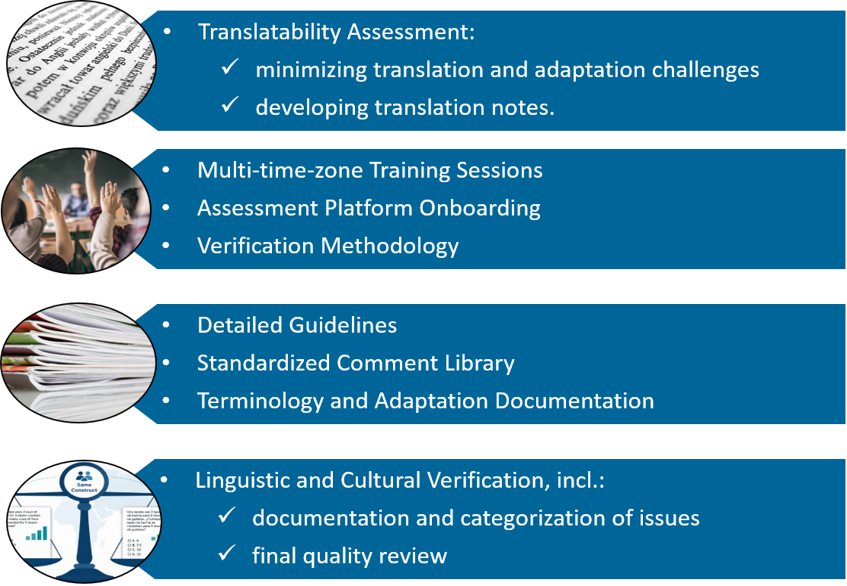
A Structured Quality Assurance Workflow
Verification was carried out through a structured process jointly developed by IEA and cApStAn.
Delivering Comparable International Data
The reliability of TIMSS results depends on every participating entity administering assessment materials that are functionally equivalent across languages and cultures.
Through expert linguistic verification, systematic quality assurance, and close collaboration with IEA and the TIMSS International Study Center, cApStAn contributed to safeguarding the validity and comparability of one of the world’s largest international educational assessments.
As TIMSS continues to evolve in an increasingly digital environment, rigorous multilingual quality assurance remains essential for producing trustworthy international evidence that supports educational research, policy development, and improved learning outcomes worldwide.
Want to try this out on your materials?
Select some sample items or sample questions, and request a free pilot at hermes@capstan.be or contact us via the form below for more details.