Case Study: EUROGRADUATE 2026
Differentiated workflows. Connected technology. Human expertise where it matters most.
About the Survey
Higher education is a key domain for future generations, and the EUROGRADUATE survey aims to collect and analyse comparable data across various countries, directly from graduates. The target groups are higher education graduates one year or five years after graduation. With regular cycles of data collection (every 4 years), the survey provides a tracking mechanism to compare results on graduate employability, job satisfaction, skills matching, as well as learning and labour mobility. The data collected is then centralised in the European Higher Education Sector Observatory’s platform (EHESO) establishing a longitudinal data source on graduate outcomes across European countries.
The final objective is to support the implementation of new and improved higher education policies at national and European level and beyond.

Project Scope
cApStAn had already handled the linguistic process in 2018 (pilot survey) and 2022 (second phase of the pilot survey). In 2026, the survey will be conducted in 17 countries across Europe, and cApStAn is providing linguistic expertise for the following languages:
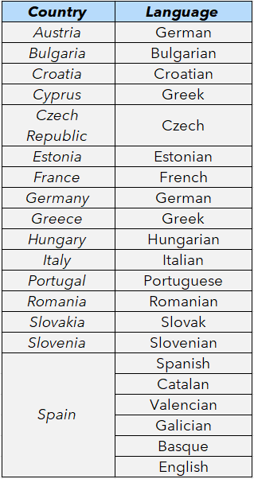
Note: Malta participates in EUROGRADUATE 2026 using the English-language survey, as English is one of Malta’s official languages.
The approximate volumes varied between 2,000 words and 4,000 words, depending on each country’s objectives for the survey. Countries could choose to implement certain or all “modules”: essential information (mandatory), recommended information, and the EU module.
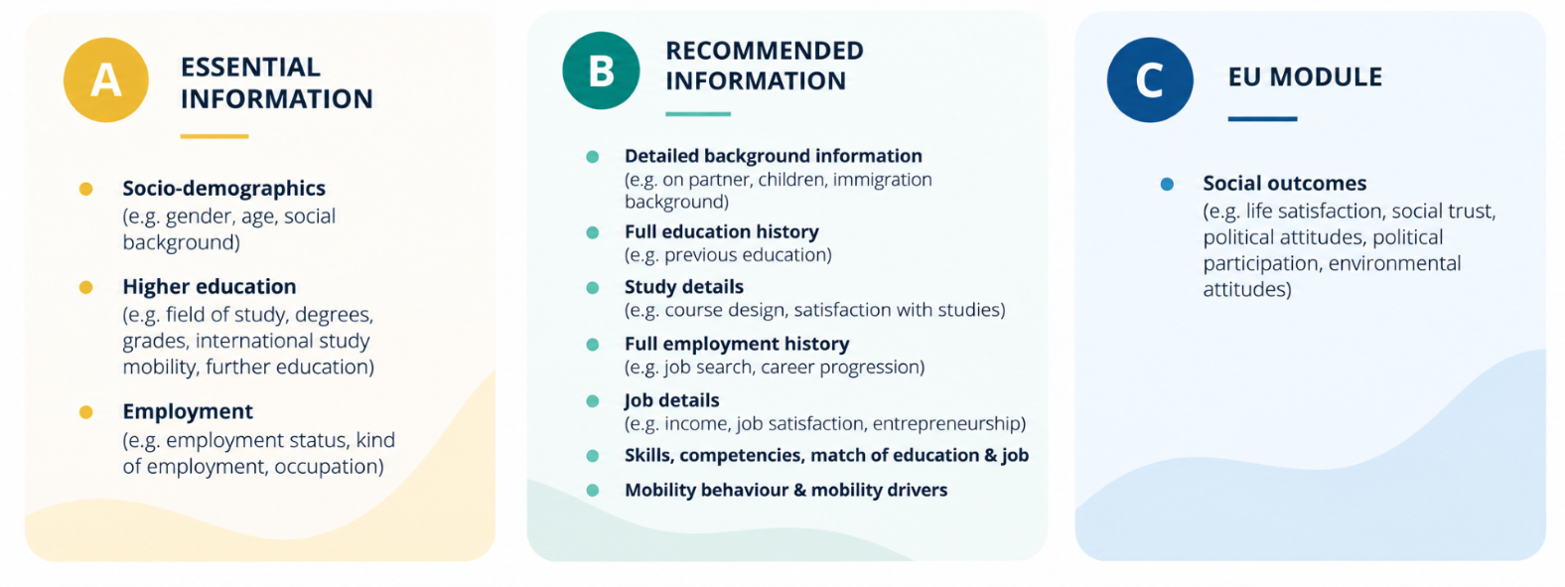
Survey modules in the 2026 cycle. Source: EHESO.
The work began in spring 2026 and is still being finalised.
Challenges
Ensuring comparability across countries while retaining national specificities required efficient collaboration between cApStAn, national teams and the other organisations responsible for the survey. Our main partner for this cycle is the Centre for Higher Education (CHE), based in Germany.
Because comparability of the results across countries was one of the priorities, a harmonised process was in place from the start and was a key element in the preparations, both for survey implementation and linguistic work. With a wide range of countries – even on the same continent – harmonisation can become complex, especially in higher education, as different systems coexist in Europe. Therefore, although all partners focused on harmonisation, flexibility was sometimes necessary.
cApStAn’s Contribution
The EUROGRADUATE 2026 linguistic work at cApStAn was led by Project Manager Emma Guéné, as part of the wider collaboration with the national teams and project partners.
As in the previous cycle, the chosen process involved verifying a translation provided by each national team. The national teams bring their subject expertise to the first translation draft, while the verifiers bring linguistic expertise to refine it. The translations are then reviewed again by the national teams, and cApStAn carefully checks each version before it moves to the next step. This provides several layers of review from different perspectives, helping to improve the accuracy and quality of the questionnaire.
For countries which had already participated, existing translations were provided as a reference, helping to maintain comparability over time where this was a priority for the national team. For countries participating for the first time, flexibility was a priority to account for the experience from any existing national surveys prior to EUROGRADUATE. cApStAn’s verifiers were trained and instructed accordingly, and played an important role in this collaboration.
A Shared Translation Environment
A new decision made jointly by cApStAn and the teams responsible for the survey was to ensure that all translation steps were performed in a computer-assisted translation tool (cApStAn’s customised version of OmegaT). This played an important role in harmonising the process. To this end, technical training was provided to users by our translation technology team, who also provided continuous assistance with the tool. This was accompanied by a separate documentation form, where each expert and linguist could comment on the hurdles encountered, specificities of the national context, and decisions taken to support comparability. After each step, these comments were carefully reviewed by cApStAn alongside the translation, which was synchronised in the translation tool. To address linguistic questions, a shared Google Sheet was set up for cApStAn to gather and respond to queries from both national teams and verifiers, with input from the CHE colleagues. This initiative provided a centralised resource supporting cross-country comparability.
Outcomes and Lessons Learned
Overall, the different areas of expertise brought together in the translation process once again showed how collaboration can improve a survey. Even where a country implemented only part of the survey, or preferred to keep the new translations as similar as possible to the previous cycle, opportunities for improvement were identified to support accuracy, comparability and relevance to the national context. In short, discussion between all parties plays a significant role.
As this was the first cycle in which all national teams were required to use the same translation tool, many of the lessons learned concerned this aspect of the project. While linguists use these tools every day, domain experts from national teams may not have used a similar tool before. We therefore remained flexible where needed to support each team and help them perform their tasks effectively. This also showed that harmonising the way translations are produced supports more detailed, accurate and less error-prone quality checks.
Next Steps
At the time of writing, most countries have finalised their translations. cApStAn continues to support those still completing the process. Results from the participating countries are expected to be shared from Autumn 2027 through the communication channels of the European Higher Education Sector Observatory (EHESO).
Client Feedback
“cApStAn has been a great source of help in the translation process of EUROGRADUATE 2026, providing expertise on known issues of transnational surveys and harmonisation.”
Want to try this out on your materials?
Select some sample items, and request a free pilot at hermes@capstan.be or contact us via the form below for more details.